
21 July 2026
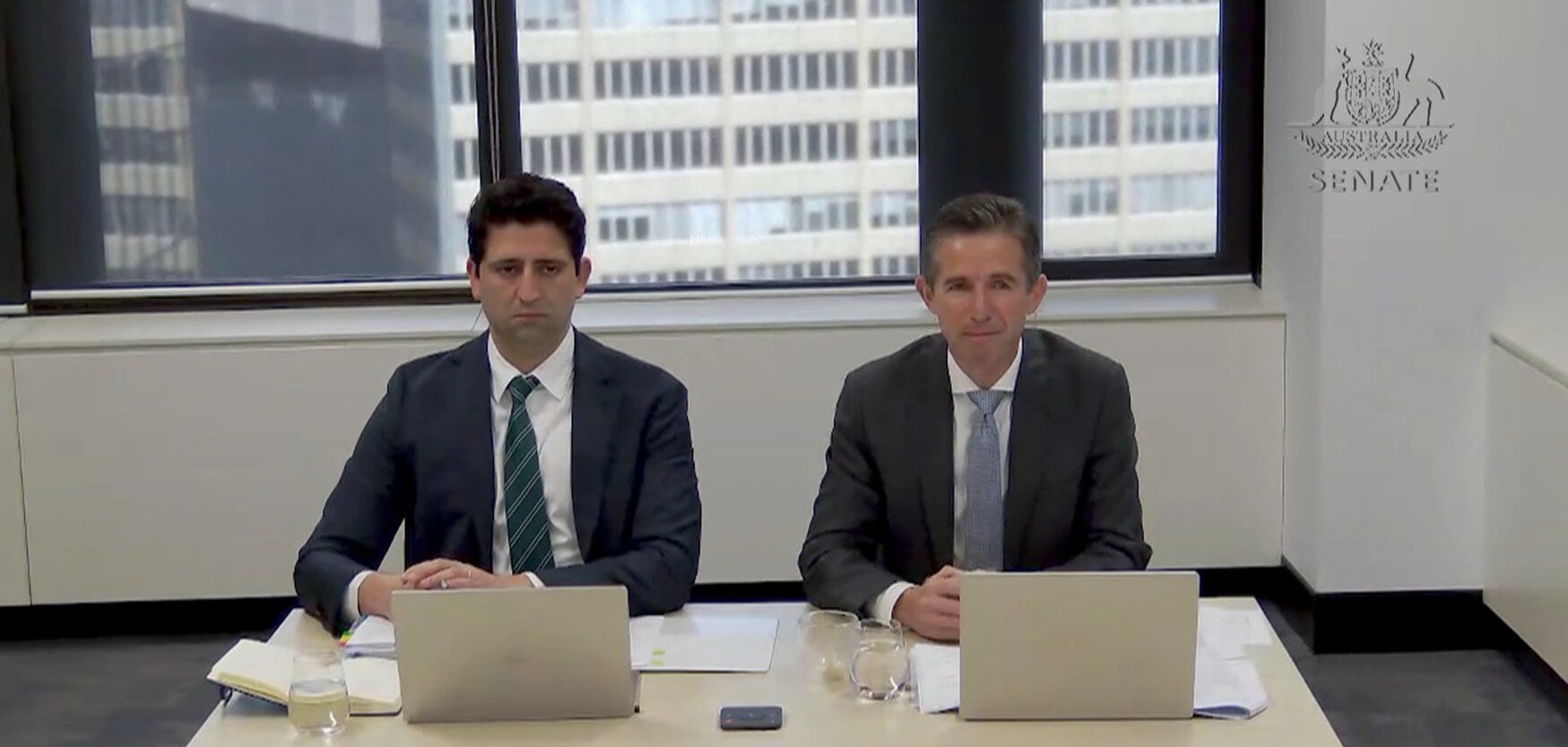
Thank you for the opportunity to appear alongside our friends and colleagues at COBA today.
The Cash Distribution Framework Bills are a critical step to provide security to the long-term availability of cash in Australia.
Our written submission sets out our position in detail. Today I will focus on a few key points.
The banking industry is committed to ensuring that Australians who wish to use cash can continue to do so and you just heard some very good reasons from COBA as to why. Cash remains an essential payment option for many Australians.
But like many other economies around the world, Australia has seen a rapid shift to tap-and-go and digital payments as the preferred way for millions of people to transact.
This customer change sped up at pace during the COVID-19 pandemic – in 2007, 70% of payments across Australia were paid for with cash. Today it is just around 15%.
Understandably this dramatic drop in the volume of cash used placed pressures on the business of those who logistically move cash around our economy: cash-in-transit operators.
These pressures emerged at a time when the two largest cash-in-transit businesses in Australia merged, creating a virtual monopoly.
When these pressures on cash distribution became apparent the four major banks, our retail partners all stepped up, in the national interest, to ensure the security of cash distribution.
Since June 2024 the ABA has coordinated Australia’s four major banks (CBA, Westpac, NAB and ANZ) – together with Australia Post, Coles, Wesfarmers and Woolworths – in providing more than $100 million of additional funding to Linfox Armaguard to ensure the continuity of cash distribution.
To be clear, such has been their commitment to keep cash available around Australia these eight companies have voluntarily paid more than $100 million to another company, Linfox Armaguard, over and above their negotiated contract terms.
This interim financial support has been provided on the understanding that LFA would work with the eight funding parties to develop a long-term solution, namely an Independent Pricing Mechanism that would then properly be subject to public consultation through ACCC processes and approvals.
The purpose of the IPM is to ensure:
- The long-term sustainability of Linfox Armaguard by guaranteeing the full funding of their efficient costs and a reasonable rate of return.
- That all Linfox Armaguard customers have transparent and formula-based pricing, comparable to regulated pricing in other monopolistic sectors.
- Affordable access to cash services right across the Australian economy – like a local pub or club, service station or chemist– particularly in regional and remote areas.
Final terms for the IPM were independently developed and settled by Deloitte earlier this month, on 7 July. The ABA and eight funding party companies have made clear their acceptance of this independent work, even though it would significantly increase the on-going future costs for these companies.
We have and continue to urge Linfox Armaguard to urgently update the draft ACCC application lodged last December and to lodge a final application as soon as possible. ACCC processes will then, quite rightly, provide all other customers – including our other members and COBA’s members – and other stakeholders the opportunity to comment on the IPM and the ACCC’s eventual approval.
I note Mr Bill Kelty’s evidence that lodgement will be a matter of discussion at their board meeting next week and urge them to act quickly to create long overdue certainty on cash distribution and to lodge that final application.
The ABA, our members and other retail funding parties to this process also support the proposed legislation before this committee today and see it as a critical safety net to guarantee cash distribution and availability in Australia.
The Reserve Bank quite rightly holds numerous emergency or contingency powers to enable them to prevent and/or respond to financial crises.
Creating similar powers to protect cash distribution is prudent and necessary in this new environment where the dramatic drop in cash use and emergence of a virtual monopoly provider for cash distribution means the market can no longer be relied upon to guarantee the fair, affordable and reliable distribution of cash.
A permanent legislative framework is important to provide regulatory certainty, ensure fair and sustainable pricing, guarantee service standards – especially in regional and remote areas – and establish clear crisis preparedness arrangements.
The transitional provisions in these Bills are equally important and their passage arguably even more urgent given Linfox Armaguard’s ACCC Enforceable Undertakings, which have provided important pricing and service protections since their 2023 merger with Prosegur, will expire though in September of this year.
These Bills achieve the right balance and are the outcome of years of work including extensive public consultation.
I note earlier questions from Senators and comments from other witnesses about the extent of consultation and draw Senator’s attention to:
- The June 2025 Council of Financial Regulators Options Paper for a regulatory regime for cash distribution.
- The March 2026 Council of Financial Regulators Conclusions Paper recommending a legislated regulatory framework.
- And Treasury’s public consultation on an exposure draft Bill through April and May of this year.
The results of these extensive consultations are proposed powers independently applied by the Reserve Bank and ACCC, modelled on established regulatory frameworks, that would apply only where those independent financial regulators deem intervention necessary.
Senators, expeditious passage of these Bills is warranted, prudent and necessary.
We therefore encourage the Committee to recommend that the Bills be passed as a priority and look forward to taking your questions.
Latest news
Banks will better detect, prevent and respond to financial abuse under an updated industry guideline released today by the Australian Banking Association. The ABA has brought together separate resources on financial abuse, including elder abuse and family and domestic violence into a single framework, building on existing industry guidance and supporting the financial abuse provisions… Read more »
The ABA and its member banks are reminding businesses to make sure they are ready for the upcoming Reserve Bank of Australia’s (RBA) card surcharge reforms which take effect from 1 October 2026. These changes mean: ABA CEO Simon Birmingham said banks were supporting business customers to prepare for these changes, along with implementing the… Read more »
E&OETV InterviewInterview on News24 with Kieran Gilbert11 September 2026 Topics: Mortgage fraud; card surcharging ban; immigration Kieran Gilbert: Let’s turn our attention now to one of the biggest financial crime syndicates in Australian history. I want to talk about the implications for our banking system with the CEO of the Banking Association, Simon Birmingham. Simon,… Read more »