
20 October 2026
E&OE
TV Interview
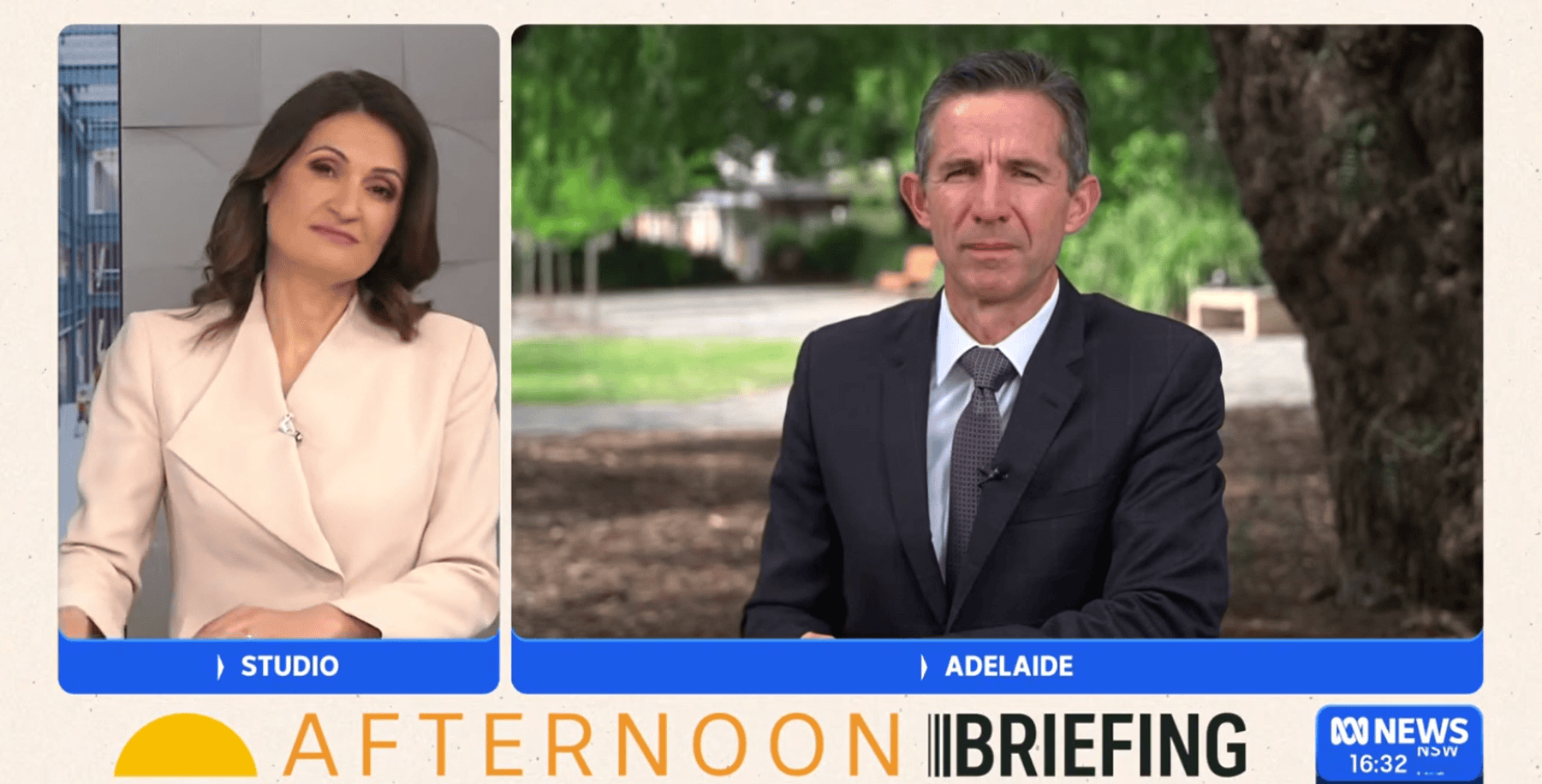
Interview ABC Afternoon Briefing
19 October 2026
Topics: Australia-EU free trade deal, investment benefits
Patricia Karvelas: Simon Birmingham is the CEO of the Australian Banking Association, but he’s a former finance minister in a previous coalition government. And our guest, welcome to the program.
Simon Birmingham: Hi, Patricia. Good to be with you again.
Patricia Karvelas: Opposition spokesman for energy for the coalition, Dan Tehan, says that they must go back to the drawing board on Australia’s EU free trade agreement. Is that possible? You’ve been a trade minister.
Simon Birmingham: Well, Patricia, I mean, firstly, I’d say all agreements need to be looked at in totality. There will be elements of any agreement that some people are not satisfied with, but when you look at it in totality, you’ve got to see where the national interest lies. Now, as you said in the intro, nowadays I’m leading the Australian Banking Association, and trade deals involve goods, services, movement of people, but also the flow of investment. And the European Union is Australia’s second largest foreign investment partner, worth around $1 trillion, and this agreement would more than treble the Foreign Investment Review Board threshold to make investment flows easier between Australia and the EU, and that’s one area of real benefit where it’s really critical that we realise those.
Now, to your question, no, it’s not easy to go back and renegotiate once governments between different jurisdictions have settled an agreement. I know from the past and in many previous agreements that we signed and delivered when in government, the Labor Party of the day had difficulties with them. The union movement, parts of the Labor Party, would often oppose different elements, particularly those elements to do with labour market access or investor-state dispute settlement arrangements, but we managed to work through those not by going and renegotiating, but by working on the sidelines in terms of addressing how they would be implemented or other points of concern, so that we could maintain ultimately bipartisan support for the implementation of trade agreements in the national interest. And I would hope those sorts of practical discussions can happen between the government, the opposition, and any other interested parties to make sure that we maintain that national interest advantage for Australia.
Patricia Karvelas: Are you concerned that your party, a party that was known for its free trade credentials, is being so opposed to this deal so far?
Simon Birmingham: Well, as said, Patricia, I would urge – and I won’t do political commentary nowadays, but I will absolutely focus on the issues that are important to our nation’s future, our economy, to the well-being and wealth of Australians – and seeing a broader network of trade agreements is good for Australia. It’s good for all parts of Australian industry. The potential growth in trade, in services, and investment from an agreement like this can be of real benefit and can strengthen Australia. And at a time when we see trade disrupted globally, and we’ve seen threats and challenges to that come from the two largest economies in the world at different times over the last decade, the importance for Australia of diversifying trade networks and partnerships is even greater, and that is why parties should come practically to the table with an attitude of how we get this done, rather than an approach that is simply standoffish and opposes it.
Patricia Karvelas: What are the ramifications of Australia not ratifying this if the government can’t find a pathway through the parliament?
Simon Birmingham: It would send a very bad signal in terms of Australia as a negotiating party, in terms of Australia and our commitment to being a global leader in relation to free trade, and our position as a global leader goes back a long, long way. Now, we have achieved many economic benefits for our country by opening up trade and opening up investment flows, and there are more to be had by pursuing agreements such as this. Is it perfect? Absolutely not. Is it everything anybody would want? Definitely not. But nor necessarily are any other agreements that have been struck, and it does require a degree of give and take and understanding of the total national interest benefits and equation.
And there is still a long process to go for this agreement and the ultimate legislation and entry into force. It hasn’t been subjected to the Joint Parliamentary Standing Committee on Treaties process, the JSCOT process yet. They will have an opportunity to scrutinise the national interest analysis. Then it would be subjected to the type of signing and ultimately, legislation that is necessary. And so, again, I would just urge all parties to not let this become an intensely partisan issue, where it is hard to step back from that divide, but instead to do the proper legwork through those processes, and ultimately to make an assessment on the national interest, and I think they will find that, in total, there is good to be had by getting an agreement like this in force and giving Australia that extra diversification, those extra trade markets, and indeed those beneficial investment flows.
Patricia Karvelas: The opposition is particularly concerned about the climate commitments in the deal. Andrew Hastie just told me it was a risk to sovereignty through exposure to the Paris Agreement. Is that right?
Simon Birmingham: Look, I understand the provisions there to largely reflect the UK deal, and the UK deal that, of course, was struck by the previous government that I was a member of, and that is in force. And I would be surprised again if parties didn’t sit down and talk practically about how those types of provisions operate and work. If there wasn’t a way for reassurance to be given, just as in the past, say we managed to give reassurance to sceptical parts of the Labor Party for them to vote for agreements that included labour market rights and access provisions or investor-state dispute settlement provisions that they didn’t really like, but we could find practical ways in terms of how they were implemented, applied and interpreted that ultimately gave then Labor opposition’s confidence to back then coalition government agreements.
Patricia Karvelas: The Grattan Institute has put out a proposal that you know even Josh Frydenberg talked about, not exactly the same, but raising the GST. The Grattan Institute says it should be raised to 15% and then a reduction of income tax. So a real reform that clearly would have its critics. But do you think it has merit?
Simon Birmingham: I think there’s merit in Australia having discussions really about how we do grow the economic pie, not just how we carve it up, and that they are the critical debates for us to have. How do you create tax policies that incentivise investment, incentivise work, incentivise the types of things that give us a bigger, stronger economy into the future? And it is well assessed and has been for some time, but it’s gotten worse in recent years – the reliance on narrow income taxes and company taxes in the Australian landscape, and if we are to address that narrowness, you’ve got to look elsewhere. And consumption-type taxes are often pointed to and a logical part for that debate.
Patricia Karvelas: Thank you so much for joining us this afternoon, Simon.
Simon Birmingham: Thanks, Patricia.
Latest news
We write on behalf of the undersigned Alliance of Industry Associations to raise a growing concern aboutgovernment’s inadequate consultation on recent complex legislative and regulatory reforms. We represent 30groups from across the economy including small, medium and large businesses, farmers, builders, retailers,universities and tax and accounting professionals. Our organisations support genuine and timely consultation as… Read more »
The ABA welcomes the release of the Federal Government’s response to the Parliamentary Joint Committee on Corporations and Financial Services’ inquiry into financial abuse, released today. ABA CEO Simon Birmingham acknowledged the important work of the committee as well as the Government’s response and said banks were committed to protecting customers from the scourge of… Read more »
E&OERadio InterviewInterview ABC Statewide Drive Victoria9 October 2026 Topics: Regional banking Jane Nield: Well, do you still have a bank branch in your local area? If you’re one of the more than 600 regional locations nationwide that have lost a bank in the last few years, did it have a big impact? So often, it… Read more »