
21 June 2026
E&OE
TV Interview
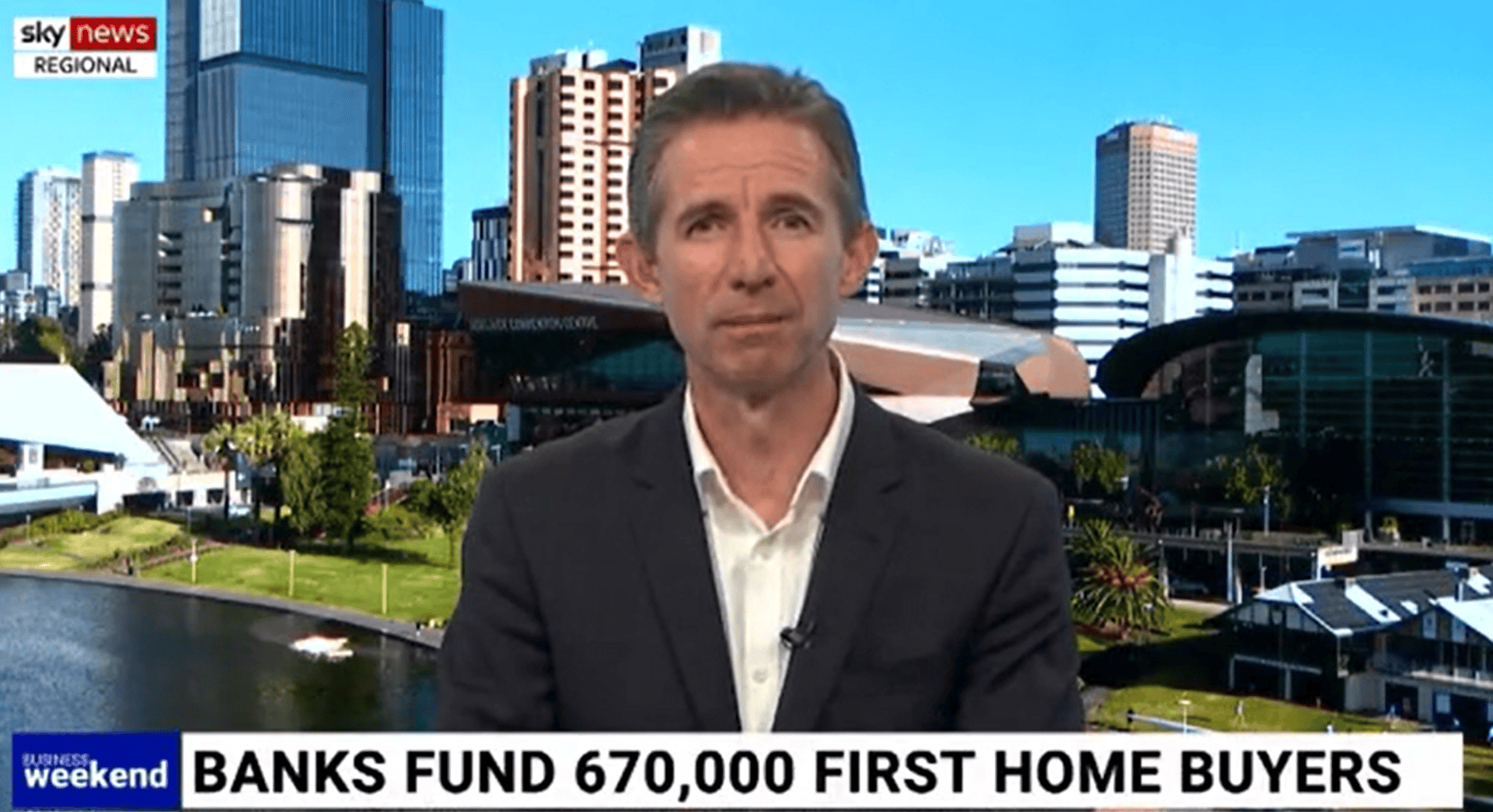
Sky News Business Weekend with Ross Greenwood
21 June 2026
Topics: Economic contribution of banks
Ross Greenwood: Well Australia’s banks, love them or loathe them, they are a necessity. We need them strong to provide the security for lenders and depositors. We need them well-regulated to keep them from again putting profit ahead of their customers. We need them resilient to withstand the constant attacks and attempts to hack their systems, and we need them responsive to pick up the phone if ever we have a problem. The Australian Banking Association this week held its annual conference, where it sought to highlight our fundamental need for strong banks. Simon Birmingham is the chief executive of the Australian Banking Association, joins me now from Adelaide. Simon, many thanks for your time. I mean, the one underlying thing about what took place this week at your conference, and about the work you put out about how important banks are, is clearly trying to steer maybe the political conversation away from super profits on our banks. Is that something that’s in the back of your mind as you start to do this body of work?
Simon Birmingham: Well, Ross, more generally, we are always focused on how we make sure that there isn’t an unnecessary tax, regulation, cost burden placed on the industry. It must be, of course, a well-regulated industry, and an industry of which high standards are expected and delivered upon. But really, what we wanted to do this week was try to shake out of this idea that banks are a grudging necessity that operate in the background, but are actually instead an essential part of the nation’s infrastructure, that banks are necessary for how our economy performs overall.
If you don’t have banks taking careful, prudent, but critical risks, you don’t get small businesses and others being able to take their risks and land. You don’t get households being able to take a risk and buy their first home. And how do banks take that risk? Well, they have to be profitable to take risks; they have to be able to reinvest into capital to take risk. But every dollar of bank profits that gets reinvested into bank capital, generates on the analysis we showed this week, $4.70 of economic activity across the Australian economy. Because it enables lending to grow, enables that risk-taking to happen in businesses, in households, and of course then spurs the taxes, the growth, the jobs that our economy depends on, and that our prosperity depends upon too.
Ross Greenwood: What the naked eye sees, what the political eye would see, is that profits now approaching $10 billion a year for some of these banks, pre-tax. And so, as a result, thinking, well, is this disproportionate to the ordinary family, to the ordinary small business? And is really a situation now where there should be a license, effectively, on the banks to have, to be able to operate in this safe and strong way?
Simon Birmingham: They’re big figures, but we also need to contextualize them. We live in an economy that is now a multi-trillion dollar economy, and these are big businesses whose return on equity to their shareholders has actually declined in relative terms compared with the rest of the world and compared with where it used to be, because they are much more competitive nowadays. But those returns to shareholders are ever more critical, actually, to all Australians, more so than they have ever been. The analysis we released this week shows that 65% of Australia’s banks are owned directly by households, either through their direct shareholdings or through their superannuation funds. That has actually increased over the last 10 to 15 years, from around the mid-50% up to that nearly two-thirds level.
And, so every dividend, every share price change, all of it actually impacts the retirement savings and the wellbeing of Australians. Therefore, the success of our economy through banks investing in it is also critical to just how prosperous Australians are as they head into their retirement years.
Ross Greenwood: And is there a job to be done if the economy heads into a period of weakness? We know the Reserve Bank and others are forecasting weaker economic outcomes. We know that some of the bank chief executives are already warning about a slowing down in the home lending area, in particular. So, are these almost rearguard actions in some ways, because clearly in tougher times banks have to make tough decisions?
Simon Birmingham: Well, there are tough decisions that are required, but there’s also a reliance by the country for banks to be able to respond to those changes too. So, we do see, whether it’s in monetary policy and shifts upwards and downwards in interest rates, that banks are used as a tool to help to control something like inflation. Equally, you could see during a time like COVID how they were used as a tool to really try to make sure the economy was supported and that banking industry stepped forward in many significant ways. In more classical downturns, you may see counter-cyclical factors come into play in terms of those capital standards, or the like, that can help to incentivize banks to be able to put more lending into the economy. It is that credit growth that is essential, yes, to banks, but more critically, credit growth is an indicator of whether people are investing. Our economy doesn’t grow if people aren’t investing, and so we’ve got to make sure that the settings are such for that investment to occur. It can only occur from bank lending if they have the credit and capacity available to be able to make those loans.
Ross Greenwood: Simon Birmingham, Chief Executive of the Australian Banking Association. Always good to chat to you, many thanks for your time today.
Simon Birmingham: Thanks so much, Ross. My pleasure.
End
Latest news
Banks welcome Treasurer Jim Chalmers’ release today of draft regulations to lift the cap on covered bond issuance, a practical step that would help small and mid-tier banks access cheaper, more stable funding. ABA CEO Simon Birmingham said these changes, including streamlined reporting for smaller banks, are a welcome part of the Government’s broader productivity… Read more »
Banks have welcomed Shadow Treasurer Tim Wilson’s call today for the Australian Prudential Regulation Authority (APRA) and the Australian Securities and Investments Commission (ASIC) to give more weight to economic growth in their decision making. ABA CEO Simon Birmingham said regulation that supports growth is key to lifting productivity across the economy. “Banks want to… Read more »
E&OETV InterviewInterview ABC Afternoon Briefing19 October 2026 Topics: Australia-EU free trade deal, investment benefits Patricia Karvelas: Simon Birmingham is the CEO of the Australian Banking Association, but he’s a former finance minister in a previous coalition government. And our guest, welcome to the program. Simon Birmingham: Hi, Patricia. Good to be with you again. Patricia… Read more »