
8 October 2026
E&OE
TV Interview
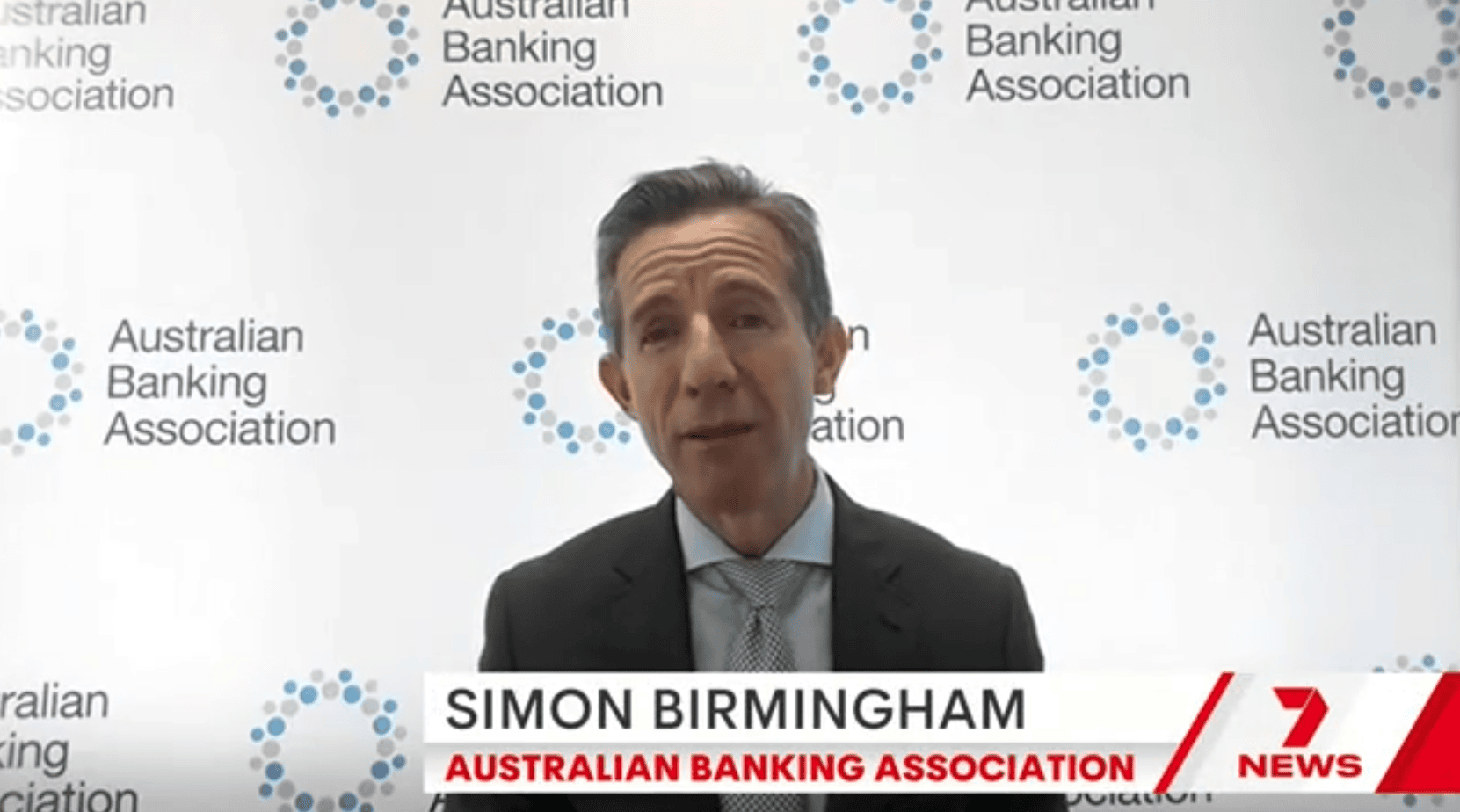
Interview on 7NEWS Regional
8 October 2026
Topics: Regional banking
James Carter: What would it mean for regional communities if it did get approved?
Simon Birmingham: What we’re asking the ACCC to approve are three things: the ability of banks to talk about commitments they make to regional Australia to guarantee the ongoing availability of basic banking services in the bush, a trial of up to 10 regional banking hubs that would be shared service delivery locations, and a funding model for how that sort of shared infrastructure could work and how banks will pay for it. All of this is about recognising that although the way people bank has changed enormously over recent years, and people just don’t use branches like they used to, we recognise that there are times where they value in-person, face-to-face contact. We want to make sure that remains available for the vast majority of Australians.
James Carter: So, some of these towns that have effectively been left as somewhat of a banking desert, could a physical presence return if this application and ultimately the trial proves successful?
Simon Birmingham: The trial of those 10 banking hub models is intended to occur in towns that do not have any bank branch at present, which will ensure those communities do get access to in-person banking services where they currently have none, and gives the banking industry an ability to really test how that works. We want to test different models too, some of which will look like a bank branch and really just be a branch without bank branding because it’ll be a shared delivery centre. Others will be potentially using local councils or Australia Post to trial the hub locations and see what works best to give the best, most effective in-person banking services to regional Australians.
James Carter: And of course, cash does remain, I’d say, still pretty popular in some of these smaller locations, and access to cash is in a lot of people’s minds in those towns without banks. Would some of these alternative options include access to cash?
Simon Birmingham: The intent is for all of these banking hubs to have cash access, also potentially coin access as well for small business banking services, and to provide the ability for people to get basic things fixed face-to-face, be that verification of identity documents or assistance in being able to resolve problems with their bank and get them resolved with the help of somebody in person face to face, who can step them through solutions, even if those solutions might normally be available using online banking or the like. We recognise that many people will need help to do that and we want to give a real person to help them achieve those outcomes.
James Carter: What models are in place in places like the UK and what kind of learnings are you hoping to take from that and bring to this model so that it can be fit for purpose for our country towns?
Simon Birmingham: We’ve recognised that a UK model or even a New Zealand model, which have similar hubs, may not be entirely applicable in the Australian context. That’s why we want to trial the hubs in different delivery models, from a bank-like branch model through to an expanded Bank@Post Australia Post type model, just to see what really can work best in a cost-effective way, but most critically a service delivery way for regional Australians.
James Carter: What are you hoping this timeline could look like when we potentially could start to see this trial get on the ground?
Simon Birmingham: Subject to us getting the ACCC approvals that legally enable us to move ahead, our hope is before this year’s out to get interim authority so we can start the planning stages, and then before next year is out, to actually have services being delivered on the ground in communities that currently don’t have a bank branch. So that they can really see what it is they are going to get and start to benefit from that access to services, as well as critically, banks being able to make clear commitments to the future in a coordinated way that can ensure regional Australians know those bank services will continue to be available as well.
James Carter: Will this model ever look to replace a traditional bank branch, or is this something that’s only really able to work in a town that doesn’t currently have access?
Simon Birmingham: It’s very much a case of crawling before you walk. We want to test this model and are purely testing it in communities that currently have no bank branch, so there can be no doubt that it is providing additional resources to Australians and not taking any away. I can’t see a world where the vast majority of face-to-face banking services don’t continue to be delivered by banks under their own brand, through their own branches, and that’s what the regional service commitments piece of this will really underpin. But as for what the long, long-term future looks like, we just want to get through this test first to see how it works out.
James Carter: Just on that regional service commitments part of this application is to be able to potentially allow banks to talk to each other about their networks and proximity and calculate things like the vulnerability of certain customers and where branches are.
Simon Birmingham: At present, Australia’s largest banks all have moratorium commitments that guarantee they will keep bank branches in regional Australia. They stretch out, some of them, for a number of years. That gives some certainty around services, but we want to make sure that we have a coordinated industry approach that can guarantee that communities of reasonable population size, reasonable economic activity, or particular vulnerability know that they will continue to have access to face-to-face banking services and to cash well into the future.
James Carter: Do you think that this application is now a sign that face-to-face banking is – maybe the closure of branches in the last decade might have gone a bit too far in some of these communities? Is it a sign that these branches are becoming increasingly more relevant with scams? What is kind of driving this want to bring these services back to these regional communities?
Simon Birmingham: As an industry, banks do recognise that while Australians have largely moved from in-person banking and going to a branch to doing things on their phone, on their computer, and digital banking now accounts for 99% plus of transactions, and in-branch activity has collapsed by more than 60%. But we know that there are times when people want face-to-face assistance – for some in vulnerable circumstances, for some at particular times like scam events or the like. So, ensuring that there is an answer for those circumstances is important to the industry, but to make it viable, we are wanting to test different options that can include collaboration that doesn’t take away at all from the competition between banking products and services. So, banks still will be fierce competitors in terms of the deposits, the loans, all of the services and products they offer, but it does mean in terms of the practical face-to-face help that people often seek in a branch, that may be able to be provided in a more effective shared way.
James Carter: One final question in terms of staffing for these hubs – what will that look like, and will there be access to a face-to-face person instead of an iPad that people go to for some of those bigger services like agribanking or business banking?
Simon Birmingham: We envisage the hubs having a mixed model. There will absolutely be a real live person providing face-to-face assistance. Where they may not be able to solve a problem, they can then help provide the connection to your bank and their services, be that over the phone or through a video connection, to make sure that you’ve still got that real live person there helping you through those steps. Also, some banks may choose to use these hubs as a location for mobile bankers to come and base themselves on an occasional or a regular basis, so that be it agribusiness or writing of loans, those services could occur by individual banks, subject to them choosing to use the hub locations.
James Carter: All right. Thank you so much for hopping on today and having a chat. Really appreciate it.
Simon Birmingham: No problems. All good. Thanks. Bye.
Ends
Latest news
Banks welcome Treasurer Jim Chalmers’ release today of draft regulations to lift the cap on covered bond issuance, a practical step that would help small and mid-tier banks access cheaper, more stable funding. ABA CEO Simon Birmingham said these changes, including streamlined reporting for smaller banks, are a welcome part of the Government’s broader productivity… Read more »
Banks have welcomed Shadow Treasurer Tim Wilson’s call today for the Australian Prudential Regulation Authority (APRA) and the Australian Securities and Investments Commission (ASIC) to give more weight to economic growth in their decision making. ABA CEO Simon Birmingham said regulation that supports growth is key to lifting productivity across the economy. “Banks want to… Read more »
E&OETV InterviewInterview ABC Afternoon Briefing19 October 2026 Topics: Australia-EU free trade deal, investment benefits Patricia Karvelas: Simon Birmingham is the CEO of the Australian Banking Association, but he’s a former finance minister in a previous coalition government. And our guest, welcome to the program. Simon Birmingham: Hi, Patricia. Good to be with you again. Patricia… Read more »