
2 October 2026
E&OE
TV Interview
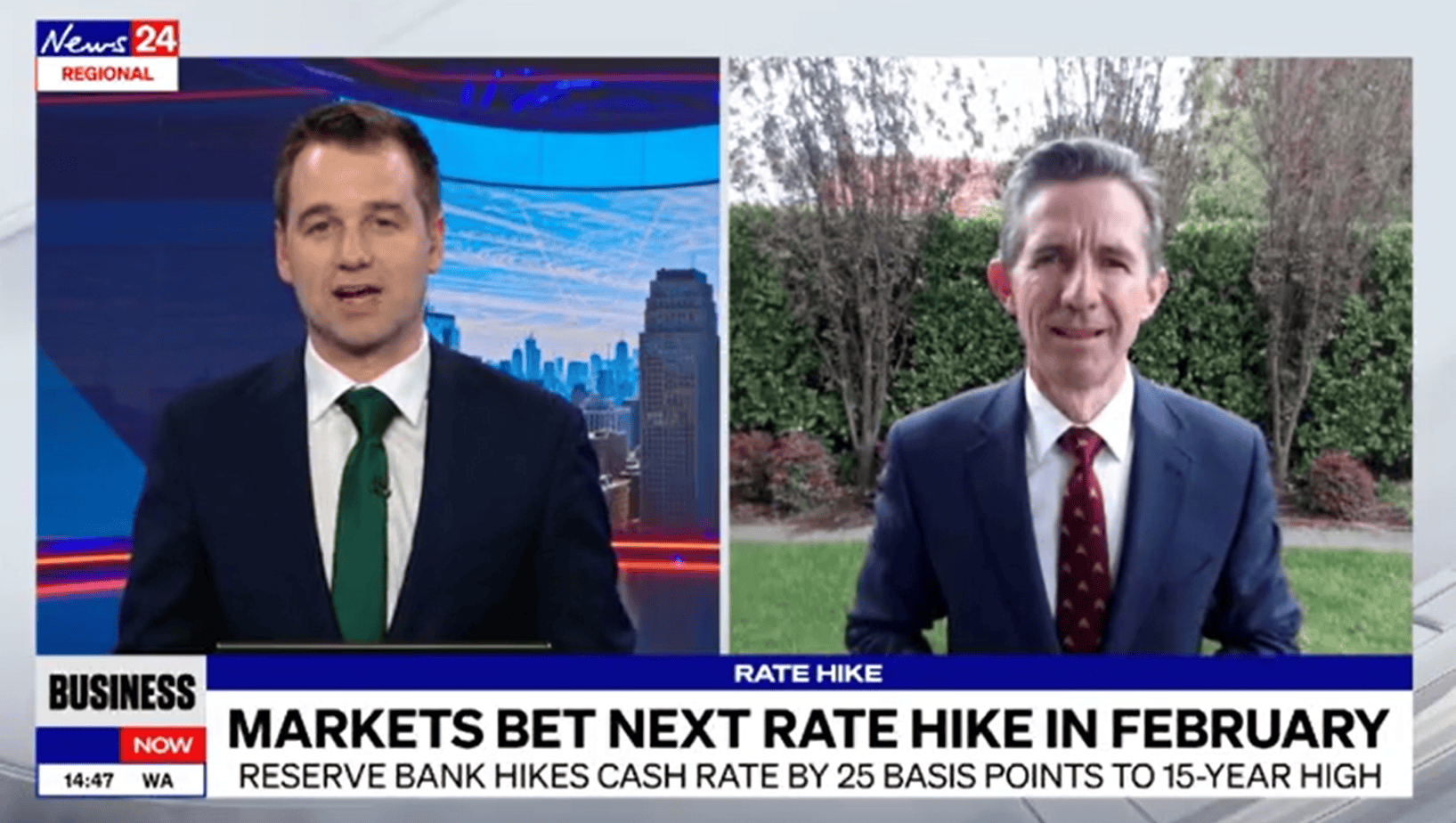
Interview on News24 Business Now
2 October 2026
Topics: Card surcharging ban
Edward Boyd: The Reserve Bank’s ban on card surcharging started yesterday, and I’ve already noticed a local cafe here in Sydney which has increased its prices to cover some additional costs. Even the ATO says it won’t accept payments from credit cards from the end of November, which has infuriated business lobby groups. So, to discuss the end of surcharges and the fallout, I’m joined by Simon Birmingham, the chief executive of the Australian Banking Association. Simon, thank you for your time. This ban has obviously been in the works for a long period of time. I mean, has the implementation gone as smoothly as the sector was hoping for?
Simon Birmingham: Oh, yeah. The ban indeed has been in the works for a while. The government foreshadowed it a number of years ago, and the Reserve Bank went through a long process in terms of looking at implementing it and how they would implement it, including the significant cuts to bank fees that they chose to apply at the same time as the surcharge ban coming in. That’s taking around 660 million dollars out of the system just in domestic card-related fees, another couple of hundred million or so in relation to international card fees to come out of the system too. So, the change we had been foreshadowing for some time was always going to present some challenges, and people always needed to acknowledge the fact that there would be businesses who would, at this point in time, reconsider what payment methods they were willing to accept: and that’s a legitimate choice for businesses. There would be businesses who would use this as a juncture to think about the rest of their cost pressures and with the high inflation environment we’re in, it’s unsurprising that some would look at those cost pressures and say, well this is a juncture at which to adjust their prices. So, it was never going to deliver some panacea of lower costs for everybody. But it does, I think, remove an irritant for many consumers and mean that people get charged the price they see rather than having an annoying shock when they look at their credit card statement later.
Edward Boyd: Yeah, I know it’s really early days, but has there been any feedback so far from small businesses to the banking sector after this ban was introduced yesterday?
Simon Birmingham: We really worked hard to make sure that banks communicated messaging out to small businesses in advance about what was happening and how it would happen. For the banks who have quite automated systems with small business customers, they would be taking the steps to switch off surcharging functions; where small business customers had less automated systems, to make sure they understood the steps they had to take to switch off those functions. And of course, many are using non-bank systems in terms of some of the hardware at the point of sale, so they’ve needed to make sure that they are taking those steps themselves. Overwhelmingly, I think small businesses are complying. There’ll no doubt be a few outliers, and of course, as I said, for people making payments, they will have to adjust where businesses or government agencies have made a decision to change what they are accepting for those payments, whether that is cash, transfers, card. It may well force some changes, and we’re seeing some of those.
Edward Boyd: You also mentioned that reduction in interchange fees, which is reducing costs. What impact do you think that’s going to start having on rewards programmes from the banks and then on consumers?
Simon Birmingham: So, the Reserve Bank was pretty clear that they wanted these changes. They were intentionally structuring them to see banks take steps where the cost of rewards programmes fell more directly on the cardholder rather than being spread across the system of payments, and that was explicit from the RBA on the way through. That is indeed how many banks have chosen to change their practices and restructure some of those programmes: the nature of the rewards. The Reserve Bank also said some may choose to adjust their annual fees, their interest-free periods – all of those different components that relate specifically to the cardholder. What’s the message therefore for cardholders? Well, it is to shop around, because whilst there are changes, there’s also an awful lot of competition that is playing out as different banks seek to get an advantage on the other. So, it’s a highly competitive marketplace for cards, as it is for small business banking. So, whether you are a cardholder looking for the best deal or a small business looking for the best deal, it does pay to shop around, and you’ll find that there are different options between the different banks.
Edward Boyd: I mentioned this in the intro, but there is evidence some small businesses have immediately raised their prices on the first of October. Is there a bit of a fear this could be a bit of an inflationary blip for the month of October and just add to those pressures we’ve already got in the economy?
Simon Birmingham: I don’t know that it’ll be so widespread as to be a blip that really flows through into the CPI. I’ll leave the economists to try to forecast and predict that more accurately. But I don’t find it surprising that small businesses, who like anybody else in Australia at present, are feeling the pressures of the inflationary environment – have decided that first of October, knowing this change was coming, was an opportunity to adjust their prices. Now, of course, that’s a very small percentage, you know, your six-dollar cup of coffee where you had 18 cents potentially added for a card surcharge. If it’s gone to $6.50, well, it’s not all due to the change in surcharging arrangements. That business should actually be seeing some reduction in some of their bank fees due to that $600 million-plus cut to the interchange fees that banks get, but they’ve probably chosen to put their price up anyway because it’s timely and because they’re facing a lot of other pressures in terms of input costs, wages costs, rental costs – all of the other things that everybody knows are going up.
Edward Boyd: Simon Birmingham, chief executive of the Australian Banking Association. Thanks for coming on the show.
Simon Birmingham: Thanks, Ed. My pleasure.
Ends
Latest news
Banks welcome Treasurer Jim Chalmers’ release today of draft regulations to lift the cap on covered bond issuance, a practical step that would help small and mid-tier banks access cheaper, more stable funding. ABA CEO Simon Birmingham said these changes, including streamlined reporting for smaller banks, are a welcome part of the Government’s broader productivity… Read more »
Banks have welcomed Shadow Treasurer Tim Wilson’s call today for the Australian Prudential Regulation Authority (APRA) and the Australian Securities and Investments Commission (ASIC) to give more weight to economic growth in their decision making. ABA CEO Simon Birmingham said regulation that supports growth is key to lifting productivity across the economy. “Banks want to… Read more »
E&OETV InterviewInterview ABC Afternoon Briefing19 October 2026 Topics: Australia-EU free trade deal, investment benefits Patricia Karvelas: Simon Birmingham is the CEO of the Australian Banking Association, but he’s a former finance minister in a previous coalition government. And our guest, welcome to the program. Simon Birmingham: Hi, Patricia. Good to be with you again. Patricia… Read more »