
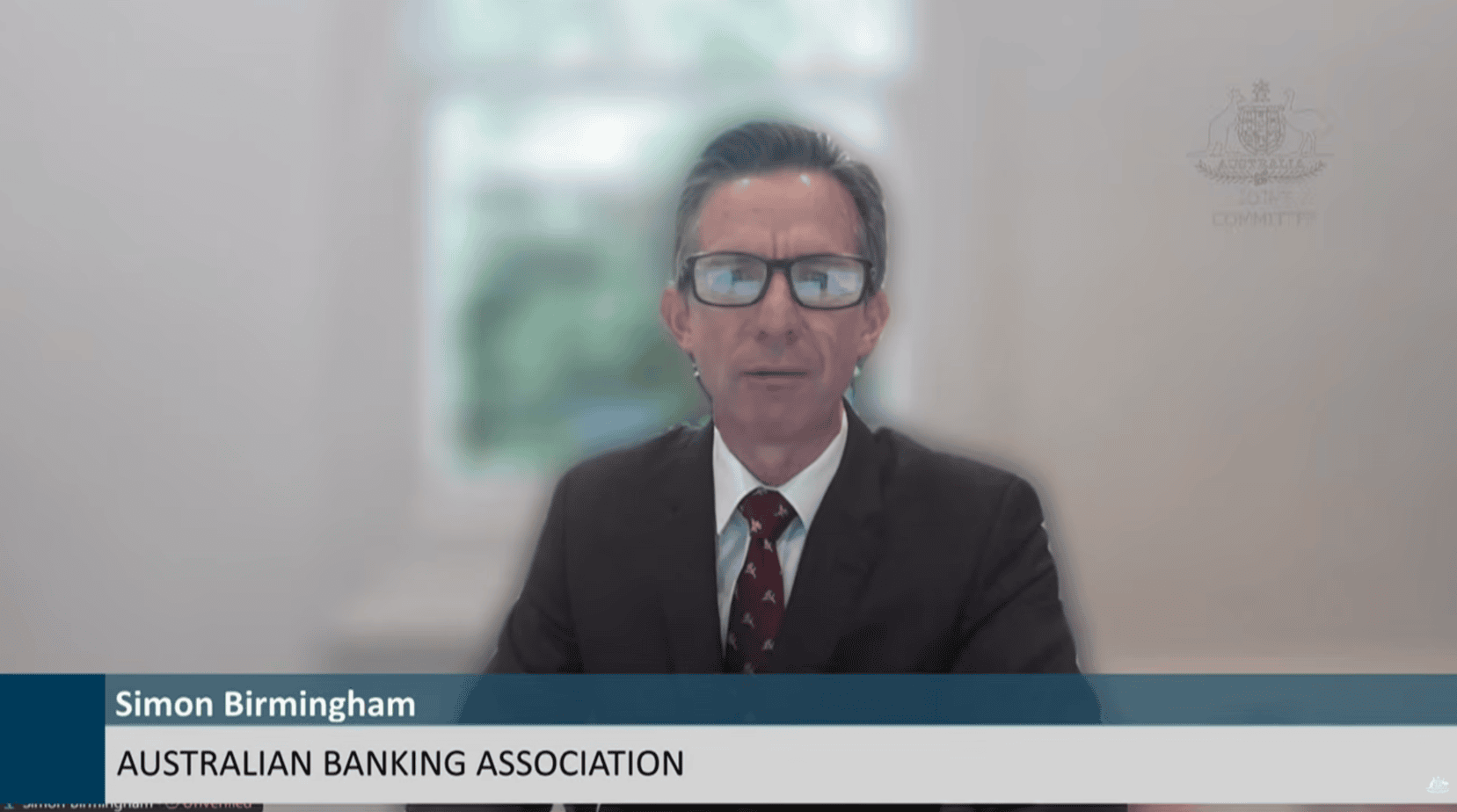
9 October 2026
Thank you, Chair, and thank you to the Committee for the opportunity to appear today.
Australia’s banks are not approaching artificial intelligence as a distant prospect. It is already at work in our industry, every hour of every day. It is checking payments in real time, answering customer questions at two in the morning, helping staff recognise a customer in financial stress during a live call, and stopping money reaching criminals before it leaves an account.
The opportunity for Australia is significant. Independent modelling puts AI’s potential contribution at up to $116 billion in additional GDP by 2036, with a net gain in jobs possible. More importantly, it offers a way to lift productivity, after two decades of weak performance. On current settings, we are on track to capture around half of what widespread adoption could deliver. Closing that gap is the potential prize.
So, our first message is simple. Australia should back adoption, investment and innovation, and back Australian capability, so more of the value is built and kept here where possible. Recently, the ABA and many of our member banks joined the ‘Buy Australian AI Partnership’, that will create a new pathway for ambitious Australian AI companies into the nation’s banking sector. This will help bridge the gap between homegrown AI capability and enterprise demand.
Banks are investing in their people through that change too, pairing new tools with training. Government has a role too: building AI skills into existing vocational and tertiary pathways, and helping small and medium businesses adopt with confidence.
Change also brings questions about data, privacy, bias, cyber resilience and accountability. These are serious questions. They are also familiar ones. Banking already operates under an extensive, technology neutral regulatory framework. APRA has set clear expectations already on AI governance, information security and third-party risk, without needing an AI-specific standard. ASIC, similarly is exercising its existing powers, having announced a review of how banks are using AI and what it means for customers.
There is, however, a different kind of risk, that does warrant the Committee’s closest attention.
The people who defraud Australians will never appear before this Committee. They are largely offshore, they answer to no regulator, and they are already using AI. They generate fake payslips, bank statements and identity documents at scale. They’re clone voices and faces. Increasingly, they will deploy autonomous agents that probe systems, impersonate customers and adapt faster than any human team could.
That threat cannot be met with yesterday’s tools. The only effective response to AI used at scale against Australians is AI used at scale in their defence. Banks are already doing this. One bank alone screens 20 million payments a day and sends more than 40,000 real-time warnings to customers, contributing to a fall in fraud losses of more than 20 per cent. Banks are deploying AI bots that engage scammers, gather intelligence and disrupt their networks.
In this contest, banks stand on the nation’s front line. We cannot defend Australians with one hand tied behind our back.
So, we ask the Committee to recommend that if there is to be any high-risk classification or AI-specific obligation expressly preserves the use of AI to detect scams, fraud, financial crime and financial abuse. Transparency obligations should not require us to reveal how those systems work, because that simply hands criminals a blueprint. And Government can also strengthen those defences: with a verifiable digital identity available across the economy, and by sharing ATO income data through the Consumer Data Right, so a lender can confirm who someone is and what they earn at the source, not from documents AI can fabricate.
Where genuinely new risks are emerging, such as AI agents transacting on a customer’s behalf, we want frameworks on questions such as responsibility and liability built early, before volumes scale. Left unchecked by rules written for a different time, these agentic systems will spawn new risks and new pathways for potential scams, fraud and data breaches.
Let me close with this. The capability that protects Australians is the same capability that will lift productivity, improve services and widen access. The data, the skills, the compute and the expertise are the same. We must build that capability to defend ourselves. Having built it, it would make little sense to deny Australians its benefits.
Australia cannot opt out of AI. The question is whether we shape it with confidence or leave others to shape it for us. Australia’s banks want to help lead, and we look forward to working with the Committee to make that possible.
Latest news
E&OEDoorstop9 News8 October 2026 Topics: Credit card surcharging ban Journalist: The Greens say that to solve this issue, the banks should be paying the credit card surcharge. What’s your response to that? Simon Birmingham: Having a safe, modern, secure payment system does come with huge costs, but banks are already cutting payment fees by around… Read more »
E&OERadio InterviewInterview ABC Adelaide8 October 2026 Topics: Regional banking Nikolai Beilharz: We know bank branches have been closing down, especially in regional areas of South Australia and Australia more broadly, including a number of places that have no local banking representation anymore. Well, a new plan has been put forward by the Australian Banking Association… Read more »
E&OERadio InterviewInterview ABC Illawarra8 October 2026 Topics: Regional banking; Card Surcharging ban Stefan Posthuma: You might have heard that the Commonwealth Bank has announced it’s closing its Albion Park branch next month. That’s despite its recent commitment to not close any regional branches until 2030. You know, this might be a common issue we’re seeing,… Read more »